

How to choose natural skincare products (And What I Look For Every Time)
I used to buy skincare products almost entirely based on packaging and front label claims. If a bottle said “natural,” “botanical,” or “plant powered,” I assumed that told me most of what I needed to know. It took a fair amount of research, and a fair number of products that did not live up to their labeling, before I developed an actual process for evaluating what I am buying, rather than trusting marketing language at face value.
I want to walk you through that process here, not as a list of specific products to buy, since formulations and availability change constantly and what works for my skin will not necessarily work for yours, but as a genuine, repeatable method you can use to evaluate any natural skincare product you are considering, whether it is a cult favorite everyone is talking about or something you just discovered on a store shelf.
As always, I want to remind you that I am not a dermatologist, and this article reflects research and personal experience rather than clinical guidance. If you have specific skin concerns, please loop in a professional alongside anything you read here.
Step One: Read the Actual Ingredient List, Not the Front Label
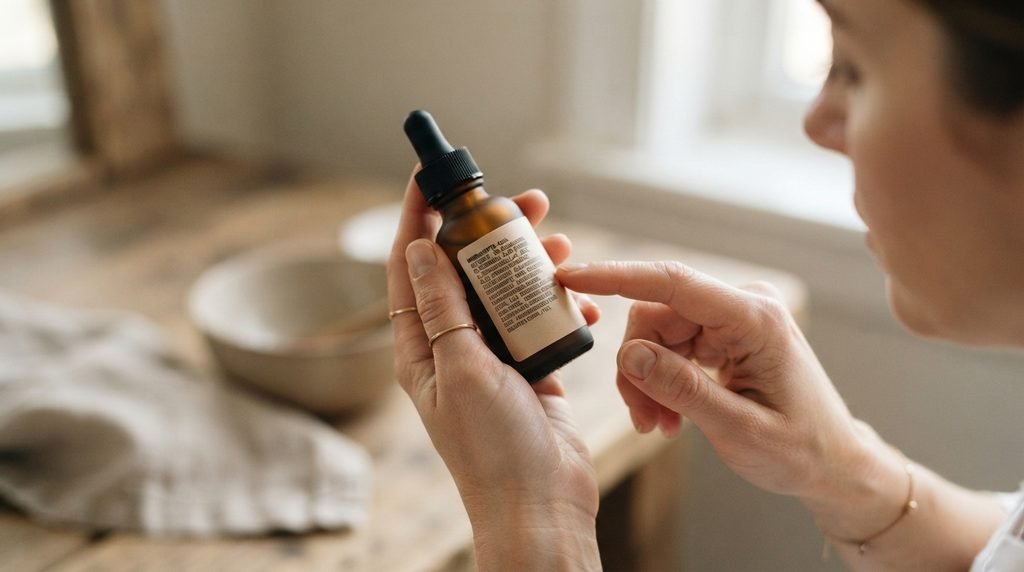
This is, without question, the single most important habit I have built into how I shop for skincare. Front of package claims like “natural,” “clean,” or “botanical” are largely unregulated marketing terms in most markets, meaning a brand can use them fairly loosely without them reflecting a specific, verified standard.
According to the U.S. Food and Drug Administration, cosmetic ingredients must be listed on the product label in descending order of predominance, meaning the ingredients present in the largest amounts appear first, moving down to those present in the smallest amounts by the end of the list. I always read through the full list rather than stopping at the first few recognizable ingredients, since a product can highlight one appealing botanical ingredient prominently on the front packaging while it actually appears quite far down the ingredient list, present only in a small amount.
Step Two: Understand What You’re Actually Looking For
Before I even start comparing products, I try to get clear on what problem I am actually trying to solve. Am I looking for something hydrating? Something calming for reactive skin? Something to support my skin barrier during a particularly dry season? Shopping with a specific goal in mind makes it much easier to filter out products that sound appealing but are not actually formulated for what I need.
I also try to separate genuine skin needs from trend driven purchases. Not every popular ingredient of the moment is necessarily right for my specific skin, and I have learned to ask myself whether I am drawn to a product because it genuinely addresses something my skin needs, or simply because it is everywhere on social media at the moment.
Step Three: Check for Ingredients I Personally Want to Avoid
Based on my own research and my skin’s history, I have built a short mental list of ingredients I tend to avoid or approach cautiously, and I would encourage you to build your own version based on your specific skin and sensitivities.
Added synthetic fragrance, particularly for reactive or sensitive skin, since fragrance is a commonly cited trigger for irritation according to dermatology sources.
High concentrations of drying alcohol, especially in products marketed toward oily or acne prone skin, since these can sometimes cause more irritation and rebound oiliness than they solve.
Vague, undefined “fragrance blends” or “parfum” listed without further detail, since this can sometimes mask a combination of ingredients that are not individually disclosed.
I want to be clear that these are my personal preferences based on my own skin’s reactions, not a universal rule that these ingredients are unsafe for everyone. Plenty of people use products containing these ingredients without any issue at all.
Step Four: Look for Transparency From the Brand
I have come to genuinely value brands that are transparent about where their ingredients come from and how their products are formulated, beyond just listing ingredients because they are legally required to. This might look like a brand publishing information about ingredient sourcing, sharing third party testing results, or clearly explaining why a specific ingredient was included in a formulation.
Transparency does not automatically mean a product is right for you, but in my experience, brands willing to be genuinely open about their formulations tend to also be more careful and intentional about what goes into them in the first place.
Step Five: Start Small Before Committing
Whenever possible, I try a smaller size or sample of a new product before purchasing a full sized bottle, particularly for anything I have not used before. This has saved me money on products that ultimately did not work for my skin, and it gives me a lower risk way to properly patch test and introduce something new without a significant financial commitment if it does not end up suiting me.
Step Six: Give It Enough Time Before Judging
One mistake I made for years was abandoning products too quickly, sometimes after just a few uses, without giving my skin enough time to actually respond. For most skincare products, particularly anything addressing hydration, texture, or gradual concerns like fine lines, I try to commit to at least three to four weeks of consistent use before deciding whether something is genuinely working, unless I notice an actual negative reaction, in which case I stop immediately.

A Few Categories Worth Understanding Before You Shop
Cleansers. I look for a cleanser that removes dirt and makeup without leaving my skin feeling tight or stripped afterward, which is usually a sign the formula is too harsh for regular use.
Moisturizers. I pay attention to whether a moisturizer is formulated for my specific skin type, since a rich, heavy cream formulated for very dry skin can feel uncomfortable and potentially clog pores on oilier skin, and vice versa.
Serums and targeted treatments. These tend to contain higher concentrations of specific active ingredients, so I am more careful about introducing them slowly, one at a time, rather than layering several new actives into my routine simultaneously.
Sunscreen. This is the one category where I am least willing to compromise on formulation quality, since consistent daily sun protection remains one of the most well supported skincare habits there is, regardless of what other products are or are not in my routine.
Bringing This Process Into Your Own Shopping
I genuinely believe this kind of thoughtful, ingredient focused approach serves you better in the long run than chasing whatever product is trending in a given month. It takes a little more time upfront, reading labels, understanding your own skin’s needs, and being willing to try smaller sizes before committing fully, but I have found it leads to a much more consistent, less frustrating skincare routine overall.
If you want to see this process applied to specific botanical ingredients, I would encourage exploring my guides on chamomile, lavender, and aloe vera, all of which commonly appear in natural skincare formulations and are worth understanding individually before you buy a product built around them. You can also read my full guide on building a skincare routine for sensitive skin if reactive skin is part of what you are shopping around.
Frequently Asked Questions
Are more expensive natural skincare products always better? Not necessarily. Price often reflects packaging, marketing, and brand positioning as much as it reflects formulation quality. I focus on the actual ingredient list and how my skin responds, rather than assuming a higher price guarantees better results.
How can I tell if a product is truly natural? There is no single universal legal standard for the term “natural” in most markets, so I recommend reading the full ingredient list yourself rather than relying on that word alone, and looking for specific, verifiable ingredient information rather than vague marketing claims.
How many new products should I introduce to my routine at once? I recommend introducing one new product at a time, waiting at least a week or two before adding another, so you can clearly identify what is and is not working, or what might be causing a reaction if one occurs.
Should I trust online reviews when choosing a new product? Reviews can offer useful context, but everyone’s skin is different, so I treat reviews as one data point among several, rather than the deciding factor, and I still prioritize reading the ingredient list myself.
A Gentle Closing Thought
Choosing the right skincare products is less about finding one perfect brand or ingredient and more about building a thoughtful, repeatable process you trust, one that puts your own skin’s actual needs ahead of trends or marketing language. I hope this process gives you a genuinely useful starting point the next time you are standing in front of a shelf full of options, unsure where to begin.

References
The following sources were used while researching this article: