

Ancient beauty rituals history: The Surprising History Behind 5 Beauty Rituals We Still Use Today
I love the moments when researching one topic accidentally leads me somewhere completely unexpected, and this article started exactly that way. I was researching a completely different ingredient when I found myself reading about ancient Egyptian cosmetic tools, and within an hour I had fallen down a genuinely fascinating rabbit hole about just how far back our everyday beauty habits actually go.
It turns out that so much of what feels modern about our beauty routines, applying eyeliner, using scented oils, exfoliating the skin, has roots that stretch back thousands of years, across completely different civilizations that never had contact with one another, and yet somehow arrived at remarkably similar ideas about caring for the body and the skin.
I want to walk you through five specific beauty rituals with genuinely old, well documented histories, and what has, and has not, changed about them since.
Ritual One: Eye Makeup and Kohl
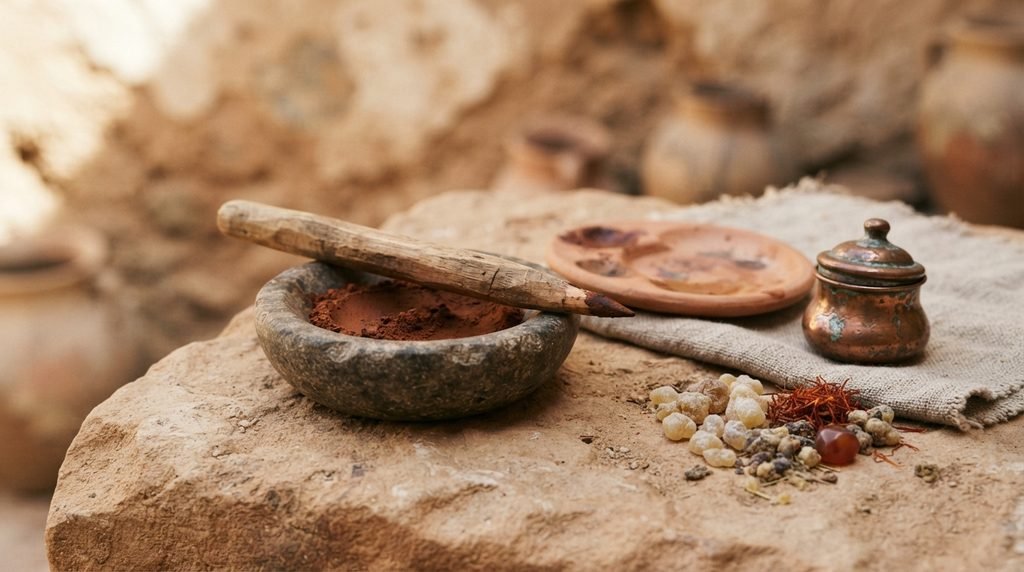
Modern eyeliner and eyeshadow can trace a fairly direct line back to ancient Egypt, where kohl, a dark cosmetic powder, was worn by both men and women across all social classes. According to research on ancient Egyptian cosmetics, kohl was typically made by grinding minerals like galena and malachite, and it was not purely decorative. Many historians believe it also served a practical purpose, helping reduce glare from the intense desert sun, in addition to whatever symbolic and spiritual significance it carried.
Cosmetics in ancient Egypt were closely tied to religious and social meaning. Statues of gods were sometimes adorned with the same cosmetic styles worn by people, suggesting a genuine connection between beauty and holiness in how Egyptians understood the practice.
What strikes me most is how directly this maps onto a modern eyeliner routine. The tools have changed considerably, but the basic idea, using a dark pigment to define and emphasize the eyes, has remained remarkably consistent across roughly four thousand years.
Ritual Two: Bathing as Self-Care
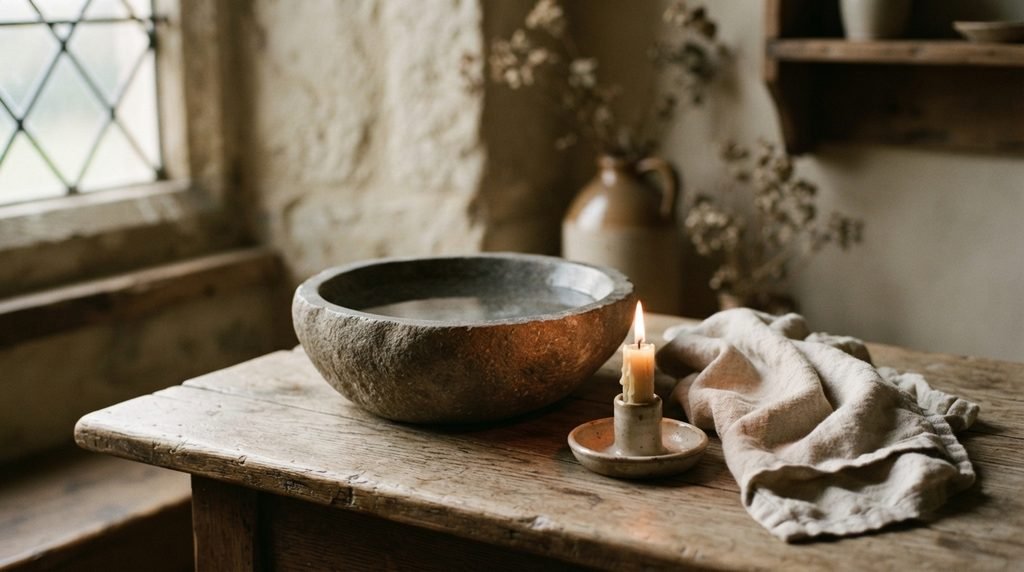
The idea of bathing as a dedicated self-care ritual, rather than purely practical hygiene, also has genuinely ancient roots. Public bathhouses have been discovered at Egyptian sites, some dating back to the third century BCE, complete with stone basins and heating systems for the water.
The Romans took this idea further still, building elaborate public bathhouses that functioned as social and wellness spaces, not just places to get clean. This is actually where the word “lavender” originates, from the Latin word “lavare,” meaning “to wash,” since the herb was commonly used to scent Roman bathwater, a connection I find genuinely delightful every time I brew a cup of lavender tea today.
The modern idea of a long, intentional bath as a form of self-care is not a wellness trend invented in the last few decades. It is, in many ways, simply a continuation of a ritual humans have practiced for thousands of years.
Ritual Three: Facial Oils and Moisturizing
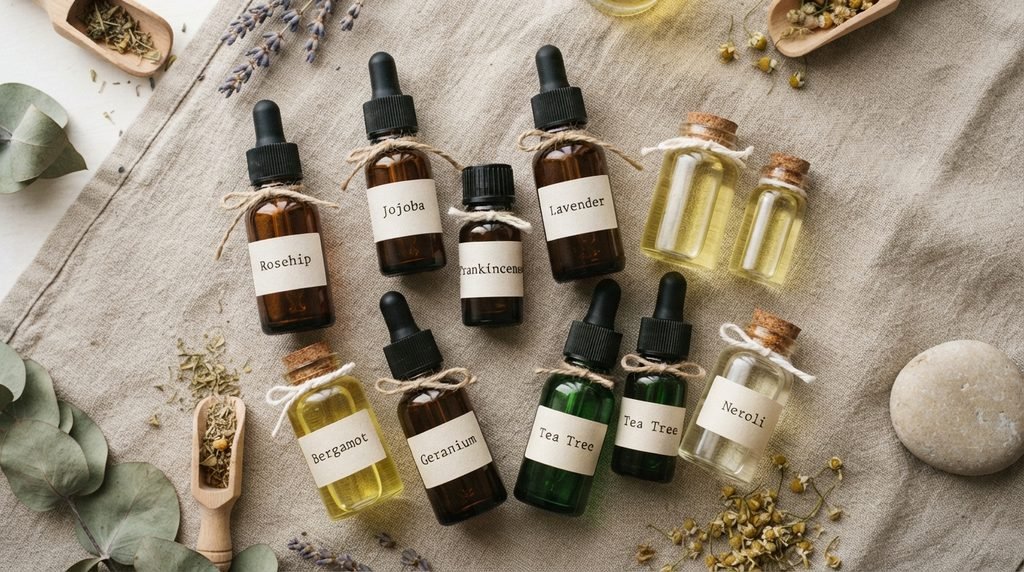
Long before “facial oil” became a specific skincare category with its own dedicated shelf space, ancient civilizations were already using natural oils to protect and hydrate skin against harsh climates. In ancient Egypt, oils and ointments were a significant part of daily beauty routines, used both for their practical moisturizing effects and their pleasant scent.
Historical accounts describe elaborate beauty regimens among wealthy Egyptian women, involving multiple steps of skin preparation before any makeup was ever applied, a sequence that would feel entirely familiar to anyone following a modern multi step skincare routine today.
Ritual Four: Fragrance as Ritual, Not Just Scent
Perfume today is often treated as a finishing touch, something applied quickly on the way out the door. But historically, fragrance played a much deeper, more ritualistic role. In ancient Egypt, scented oils and resins were used in religious ceremonies, applied to statues of deities, and considered an important part of honoring both the living and the dead.
Ancient temples, including sites like Karnak, reportedly produced their own scented oils, with wall inscriptions documenting specific recipes, suggesting fragrance production was considered important enough to be recorded and preserved formally, much like a treasured recipe passed down through generations today.
Ritual Five: Herbal Remedies as Part of Beauty
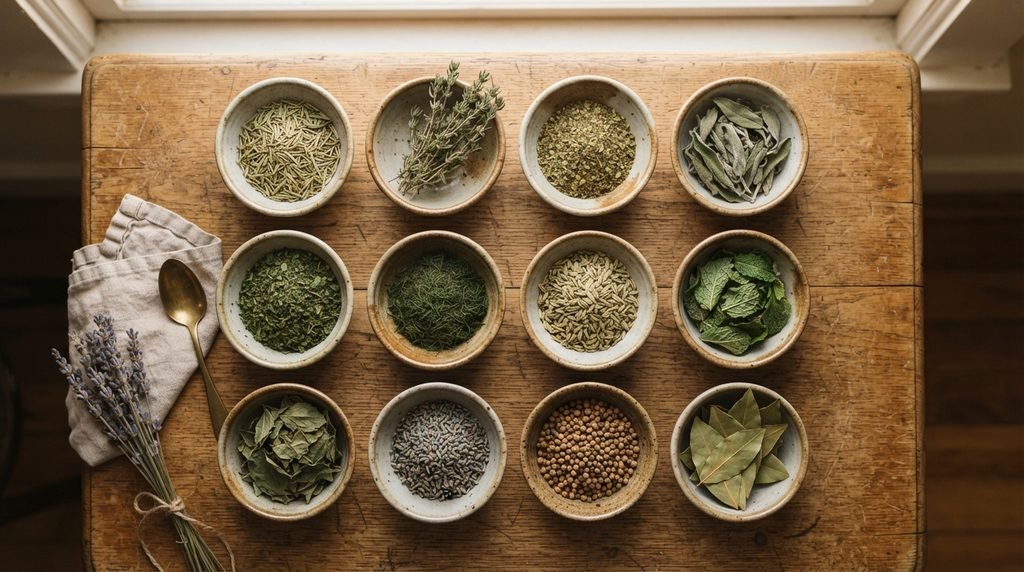
The overlap between herbal medicine and beauty is not a modern wellness industry invention either. Ancient Egyptian, Greek, and Roman cultures all incorporated herbs into their beauty and self-care practices, often blurring the line between what we would today separate into “skincare” and “medicine.”
This is actually a theme that runs through nearly every article I write here at FloraGlowUp. Herbs like chamomile and lavender, which I have written about in detail elsewhere on the site, were valued by ancient cultures for reasons that, in many cases, modern research is only now beginning to formally investigate and, in some instances, genuinely support.
What This History Actually Teaches Us
I think there is something genuinely grounding about realizing how old these rituals really are. It reframes a beauty routine from something driven purely by trends and marketing into something that connects us to a much longer, much more universal human tradition of caring for the body.
It also offers a useful perspective when evaluating modern beauty trends. Practices that have persisted across multiple, unconnected civilizations for thousands of years, like using natural oils to protect skin or incorporating herbs into self-care rituals, tend to be worth taking seriously. Trends that appear and disappear within a single fashion cycle are usually a different story entirely.
That said, I want to be careful not to romanticize ancient practices uncritically. Some historical beauty ingredients, including certain lead based cosmetics used in various ancient cultures, were genuinely harmful by modern safety standards, which is a good reminder that “ancient” does not automatically mean “safe,” any more than “natural” automatically means safe today. Understanding history is valuable, but it should always be paired with current, credible safety information, which is why I always encourage checking with a qualified professional before trying something new, however old its roots might be.
Bringing a Little History Into Your Own Routine
You do not need to recreate an ancient Egyptian beauty regimen to appreciate this history. But I do think there is something worthwhile about approaching your own routine with a similar sense of ritual and intention, rather than rushing through it as one more task on a long list.
If any of these five rituals sparked your curiosity, I would encourage exploring our Herbs & Plants category to learn more about the specific botanical ingredients behind so many of these traditions, or our Natural Wellness category if you are interested in building more intentional, ritual based self-care habits into your own routine today.
Frequently Asked Questions
Did ancient beauty rituals actually work? Some historical practices, like using natural oils for moisturizing or certain herbs for skin soothing, align with what modern research still supports today. Others, particularly certain historical cosmetic ingredients, were later found to be genuinely harmful, so history alone is not a guarantee of safety or effectiveness.
Which ancient civilization had the most advanced beauty practices? Ancient Egypt is particularly well documented thanks to extensive archaeological evidence, including cosmetic tools and containers preserved in tombs, but Greek, Roman, and other ancient cultures also developed sophisticated beauty and self-care traditions worth exploring.
Are any modern beauty products based directly on ancient formulas? While exact ancient formulas are rarely used today, many modern products draw conceptual inspiration from historical ingredients and practices, particularly in the natural and botanical beauty space.
A Gentle Closing Thought
Beauty rituals have never really been just about appearance. Across thousands of years and completely different civilizations, they have consistently carried social, spiritual, and deeply personal meaning. I find that history genuinely comforting, a reminder that taking a few intentional minutes for yourself is not a modern indulgence, but something deeply, consistently human.
References
The following sources were used while researching this article: