
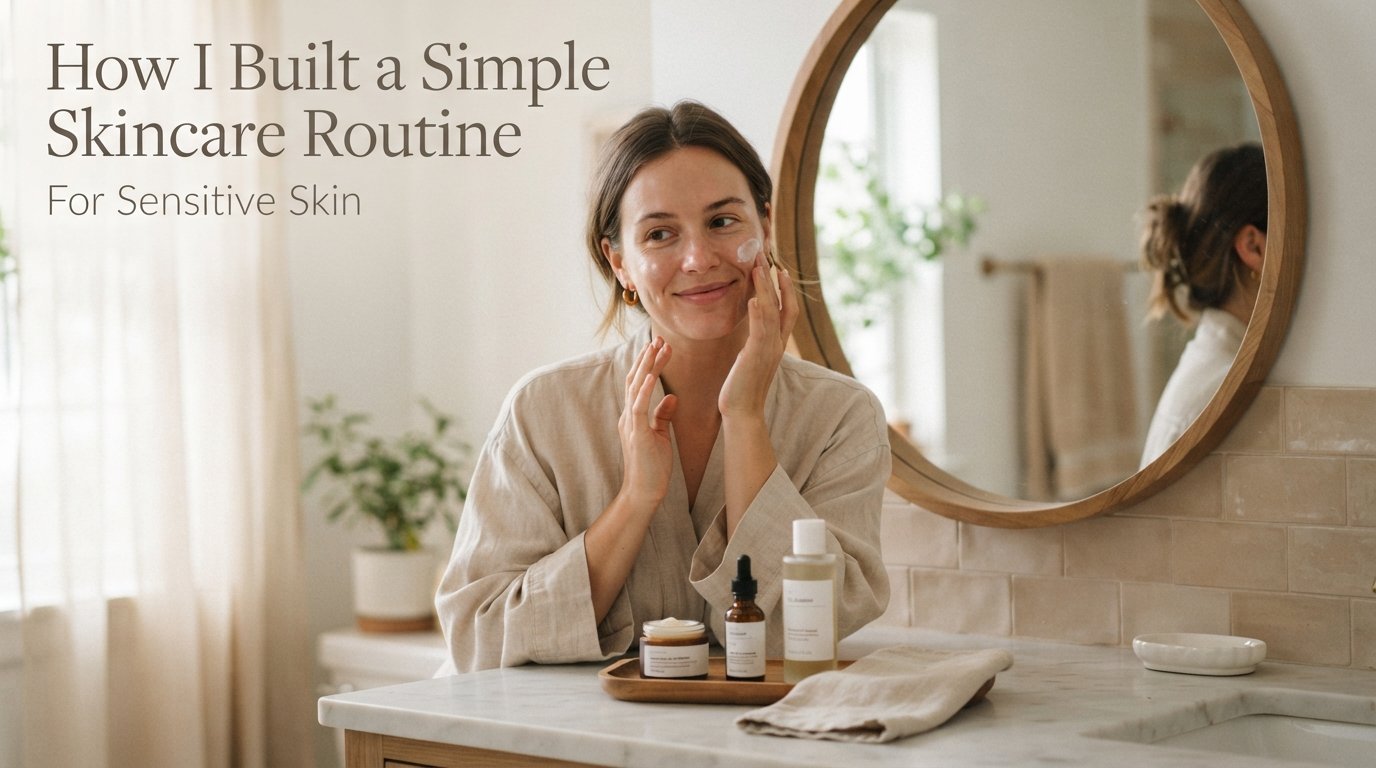

Skincare Routine
For years, my skin reacted to almost everything. A new cleanser would leave my cheeks red for hours. A scented lotion I loved the smell of would leave my jaw itching by the end of the day. I spent so long assuming this was just something I had to live with, until I finally sat down and rebuilt my entire routine from scratch, this time paying attention to what my skin was actually telling me instead of chasing whatever product was trending that month.
This article is the routine that came out of that process. It is not a miracle fix, and it will not look exactly like everyone else’s sensitive skin routine, because sensitivity itself varies so much from person to person. But I hope walking through how I approached it, what I learned along the way, and where I still ask for professional help gives you a useful starting point for your own skin.
Before I go further, I want to be clear about something. I am not a dermatologist. Everything here comes from research and personal experience, not clinical training. If your skin is reacting persistently, painfully, or in ways that worry you, please see a board certified dermatologist rather than relying on a general wellness article, including this one, to diagnose what is happening.
Understanding What “Sensitive Skin” Actually Means
One of the most useful things I learned early on is that sensitive skin is not really a diagnosis on its own. It is more of a description of how skin reacts, often stinging, burning, or turning red after using certain products, being exposed to certain weather conditions, or even just touching certain fabrics. According to the American Academy of Dermatology, common triggers for sensitive skin reactions include fragranced products, harsh soaps, and certain active ingredients used at too high a concentration or too frequently.
Understanding that sensitivity is a pattern rather than a fixed label helped me stop panicking every time my skin reacted and instead start paying closer attention to what, specifically, was causing it.
Step One: Simplifying Before Adding Anything New
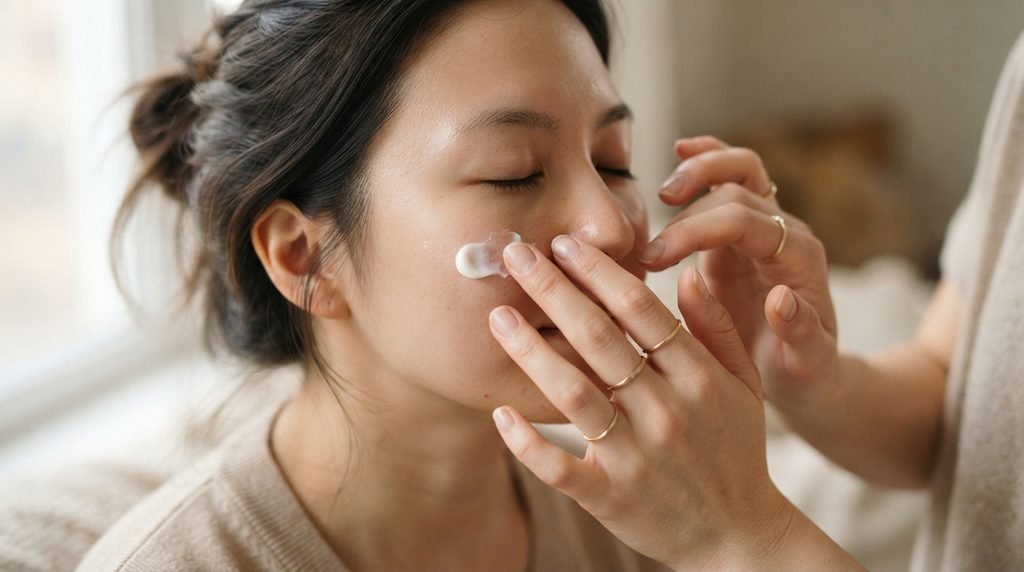
The very first thing I did, and honestly the thing that made the biggest difference, was strip my routine down to the absolute basics. For about three weeks, I used nothing but a gentle cleanser and a simple, fragrance free moisturizer. No exfoliants, no actives, no new products of any kind.
This step felt almost too simple to matter, but it gave my skin a chance to reset and gave me a clearer baseline for understanding how it behaved without constant new variables being introduced. If you are dealing with ongoing sensitivity and are not sure where to start, I genuinely think simplifying first, before adding anything new, is one of the most underrated steps in the entire process.
My Current Morning Routine
Gentle, low foam cleanser. I look for cleansers specifically labeled fragrance free, not just “unscented,” since unscented products can sometimes still contain masking fragrances. I avoid anything that foams aggressively, since that often signals stronger surfactants that can strip the skin’s natural barrier.
Lukewarm water only. This sounds minor, but hot water was something I did not realize was contributing to my irritation until I switched to lukewarm water and noticed less redness afterward.
A simple, barrier supporting moisturizer. I look for short ingredient lists with recognizable, calming ingredients like ceramides, glycerin, or oat extract, rather than long lists filled with multiple active ingredients layered together.
Mineral sunscreen. Since starting to pay closer attention to my skin, I have found that mineral sunscreens, formulated with zinc oxide or titanium dioxide, tend to be gentler on my skin than chemical sunscreen formulas, though this can vary from person to person.
My Current Evening Routine
Double cleansing, but gently. On days I have worn sunscreen or makeup, I use a gentle oil or balm cleanser first, followed by my regular fragrance free cleanser. On days without makeup, I skip straight to the second step.
Moisturizer, sometimes with a light layer of facial oil. In drier months, I add a thin layer of a simple, single ingredient facial oil, such as jojoba oil, on top of my moisturizer to help lock in hydration.
Actives, introduced slowly and one at a time. This is the part of my routine I am most careful with. When I want to introduce something like a gentle retinoid alternative or a mild exfoliating acid, I introduce it alone, at a low frequency, usually once or twice a week at first, and I wait several weeks before adding anything else new.

Ingredients I Personally Avoid
This list is based on my own skin’s reactions and general research, not a universal rule for everyone with sensitive skin, since triggers really do vary from person to person.
Added fragrance, whether synthetic or “natural,” tends to be one of the most common triggers for reactive skin, according to dermatology sources.
High concentrations of alcohol in toners and lightweight lotions, particularly denatured alcohol used to create a quick drying, matte finish, since this can be drying and irritating for reactive skin over time.
Layering too many actives at once, such as combining retinoids, strong acids, and vitamin C in the same routine without gradually introducing each one, which is a mistake I made more than once before learning to slow down.
How I Introduce New Products Without Overwhelming My Skin
Whenever I want to try a new product, I follow a simple process that has saved me from a lot of unnecessary irritation over the years.
I start with a patch test, applying a small amount to my inner arm or behind my ear for a few days before using it on my face. If there is no reaction, I introduce it to my face alone, without pairing it with any other new products, and I wait at least a week or two before drawing any conclusions about how my skin is responding.
This process takes patience, and I will be honest that it is tempting to skip it when a new product arrives and I am excited to try it. But every time I have skipped patch testing, I have regretted it, so I try to treat this step as non negotiable at this point.
Reading Ingredient Labels With More Confidence
I used to feel completely lost looking at an ingredient list, and to some extent, I still do not understand every single name on a label. But I have learned a few practical habits that help.
Ingredients on cosmetic labels are listed in descending order by quantity, meaning the first several ingredients typically make up the bulk of the formula. I pay closer attention to what is listed near the top of the ingredient list rather than getting distracted by a single appealing ingredient mentioned prominently on the front packaging, since that ingredient may only be present in a very small amount.
When I Bring in a Dermatologist
There is a limit to what a well built at home routine can do, and I think it is important to be honest about that. I make an appointment with a dermatologist when a reaction persists for more than a week or two despite removing likely triggers, when I notice symptoms like swelling, blistering, or intense pain rather than mild redness, or when I am considering a stronger active ingredient, such as a prescription strength retinoid, and want guidance on how to introduce it safely for my specific skin.
I would encourage you to do the same rather than trying to troubleshoot a significant or ongoing reaction entirely on your own, since a dermatologist can identify things, like an underlying skin condition, that a general skincare routine simply cannot address.

Building Patience Into the Process
If there is one mindset shift that helped me more than any specific product, it was learning to be patient. Sensitive skin often takes longer to show visible improvement than skin that tolerates more aggressive routines, and I had to get comfortable with slow, steady progress rather than expecting immediate results every time I changed something.
I also had to let go of comparing my routine to other people’s, since a five step routine that works beautifully for someone else’s skin might genuinely be too much for mine, and that does not mean anything is wrong with either of us.
If you enjoyed this guide, you might also like my article on aloe vera in natural beauty, since aloe is one of the calming ingredients that has become a regular part of my sensitive skin routine. You can also explore our full Beauty & Skincare category for more routine building guides, or read about chamomile benefits if you are interested in other gentle, plant based ingredients.
Frequently Asked Questions
How long does it take to see improvement in a sensitive skin routine? In my experience, meaningful improvement often takes several weeks of consistent use, since skin needs time to rebuild its barrier after irritation. If you see no improvement after a month or notice worsening symptoms, it is worth consulting a dermatologist.
Can I still use active ingredients like retinol if I have sensitive skin? Many people with sensitive skin can tolerate gentler forms of actives when introduced slowly and used at a lower frequency, but this really does depend on individual skin, so I recommend discussing your specific situation with a dermatologist before starting.
Is “natural” always better for sensitive skin? Not necessarily. Some natural ingredients, including certain essential oils, can actually be more irritating for reactive skin than well formulated synthetic ingredients. I focus more on whether an ingredient is gentle and well tolerated by my skin specifically, rather than whether it is labeled natural.
A Gentle Closing Thought
Building a routine that genuinely works for sensitive skin is less about finding one perfect product and more about learning to listen closely to how your own skin responds, then adjusting patiently from there. I hope sharing my process gives you a useful starting point, even if your final routine ends up looking completely different from mine.

References
The following trusted institutions were used as sources while researching this article: