


Nighttime wellness routine
For a long time, my evenings looked the same way I imagine a lot of people’s do. I would work, or run errands, or scroll through my phone until I was tired enough to fall asleep out of sheer exhaustion rather than any real sense of calm. I did not think of this as a problem exactly, just as how evenings worked, until I noticed how much better my mornings felt on the rare occasions I actually wound down properly the night before.
That noticing eventually turned into a genuine nighttime routine, one that has changed slowly over the years as I have learned more about what actually helps me and what was just something I read once and assumed would work. I want to walk you through what that routine looks like now, along with what research actually says about why these kinds of rituals matter.
As always, I want to be upfront that I am not a sleep specialist or a medical professional. If you are dealing with ongoing sleep difficulties, insomnia, or a sleep disorder, please speak with a doctor rather than relying solely on general wellness content, including this article, to address it.
Why Nighttime Rituals Matter More Than I Realized
For a long time, I assumed that sleep either happened easily or it did not, and that there was not much I could personally do to influence it beyond going to bed earlier. What changed my mind was learning more about sleep hygiene, a term used to describe the habits and environment that support consistent, good quality sleep.
According to the Centers for Disease Control and Prevention, healthy sleep habits include keeping a consistent sleep and wake schedule, creating a comfortable and quiet sleep environment, and limiting things like caffeine and heavy meals close to bedtime. A relaxing pre bed routine is consistently mentioned across sleep hygiene guidance as a way to help separate the busyness of the day from the process of actually falling asleep.
This idea, that your body benefits from a clear transition between “awake and active” and “winding down,” is really the foundation of everything I do in my current evening routine.
My Current Nighttime Routine
I want to share this honestly, including the parts that are more personal preference than strict science, since I think a nighttime routine works best when it actually fits your life rather than following someone else’s exactly.
About Ninety Minutes Before Bed: Winding Down From the Day
This is when I start closing out anything work related. I try not to check email or take on new tasks after this point, since I have noticed that starting something new right before bed tends to keep my mind more active than I want it to be at that hour.
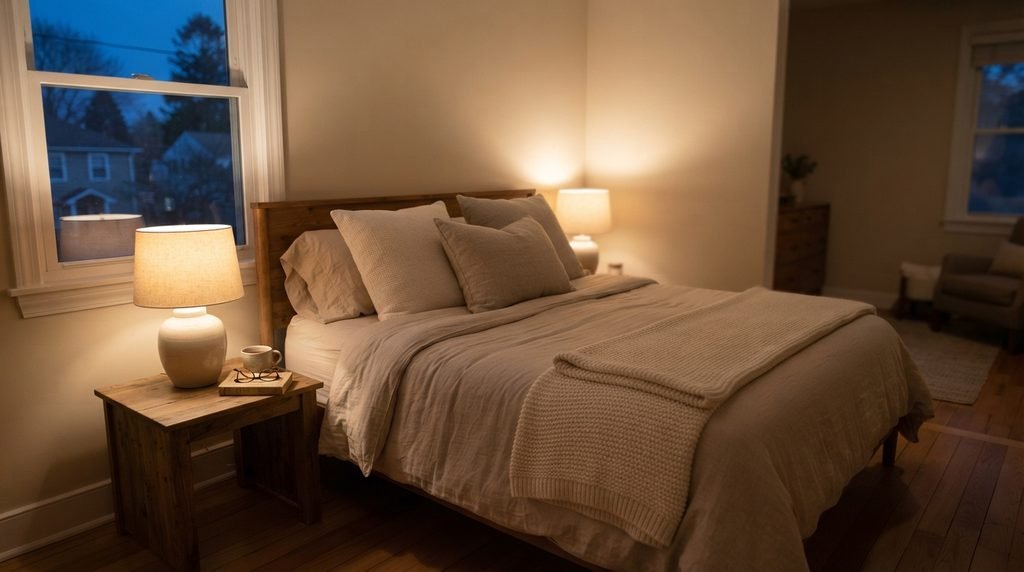
I also dim the lights around the house during this window. Bright overhead lighting in the evening always seems to work against the sense of winding down I am trying to create, so switching to warmer, softer lighting has become a simple but meaningful part of the transition.
About Sixty Minutes Before Bed: A Warm Cup of Tea
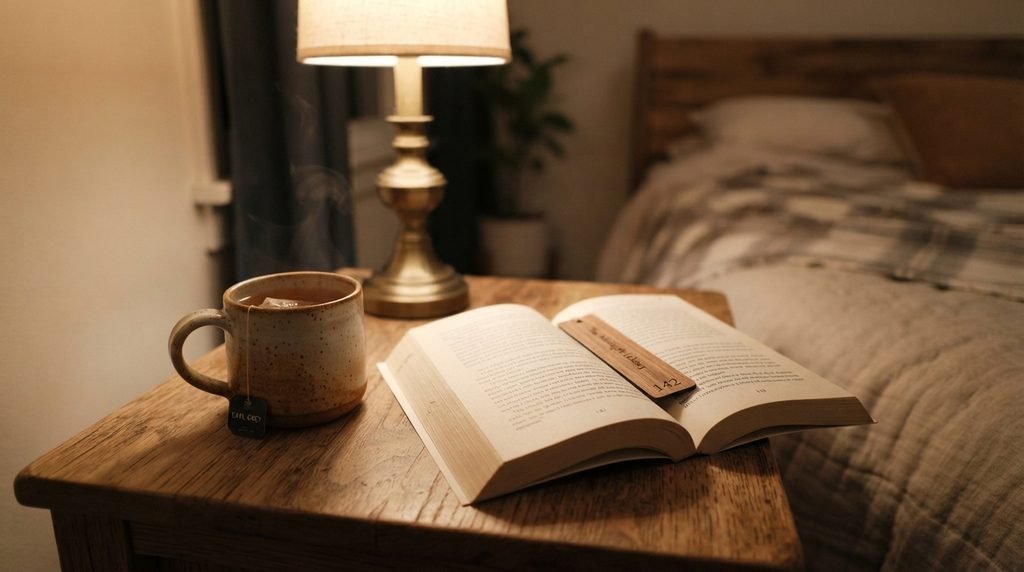
I usually make a cup of chamomile tea around this time, treating it as a small ritual rather than a guaranteed sleep aid. I wrote more about this in my article on chamomile benefits, including what research actually says about its relationship to relaxation, which is worth reading if you are curious about the herb itself rather than just the ritual around it.
About Forty Five Minutes Before Bed: Putting Devices Away
This is honestly the habit I have struggled with the most, and I will not pretend I am perfect at it. But on the nights I do put my phone in another room rather than keeping it on my nightstand, I fall asleep noticeably faster and with a calmer mind. I have started treating this less as a strict rule and more as something I try to do most nights, without being too hard on myself when I slip.
About Thirty Minutes Before Bed: A Simple Skincare Ritual
Beyond the practical benefits for my skin, this step has become a genuine signal to my brain that the day is ending. I keep this part of my routine simple and unhurried rather than treating it as another task to rush through. If you want more detail on how I approach this specifically for reactive skin, I wrote about it in my guide on building a skincare routine for sensitive skin.
About Fifteen Minutes Before Bed: A Few Minutes of Quiet
I do not follow a strict meditation practice, but I do try to spend a few minutes sitting quietly, sometimes with a few slow, deliberate breaths, before actually getting into bed. Some nights this looks like genuine stillness, and other nights it looks more like simply sitting without my phone in hand. Both versions feel worthwhile to me.
Creating a Sleep Friendly Environment
Beyond the routine itself, I have made a few changes to my actual sleep environment that research consistently points to as meaningful.
Keeping the room cool. Sleep hygiene guidance from institutions like Cleveland Clinic consistently points to a cooler room temperature, generally in the mid to high sixties Fahrenheit, as more conducive to good sleep than a warm room.
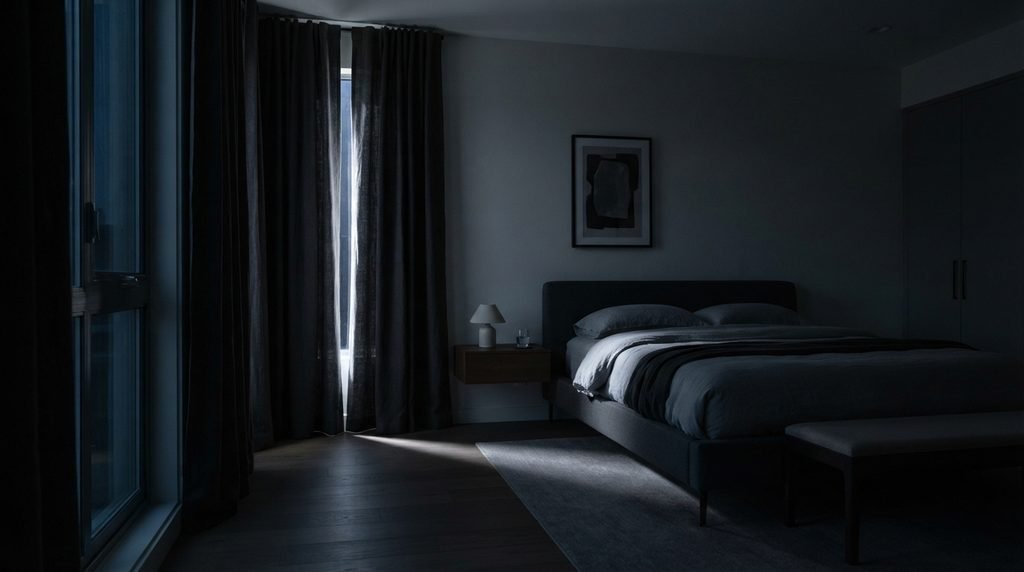
Reducing light exposure. I use blackout curtains in my bedroom, which has made a noticeable difference, particularly during longer summer days when natural light lingers well into the evening.
Keeping the bedroom for sleep. I try to avoid working or watching television in bed, since consistently associating your bed with sleep, rather than with other activities, is a habit frequently recommended in sleep hygiene guidance.
What I Avoid in the Evening
Just as important as what I actively do is what I have learned to avoid, at least most of the time.
Caffeine after early afternoon. This one made a bigger difference than I expected once I actually paid attention to it, since caffeine can stay in your system for several hours longer than most people realize.
Large meals right before bed. I try to eat dinner with enough of a gap before bedtime that I am not going to sleep on a completely full stomach, since this has personally made a noticeable difference in how easily I fall asleep.
Intense exercise very late in the evening. I still exercise regularly, but I have shifted more vigorous workouts earlier in the day after noticing that late, high intensity exercise tended to leave me more alert rather than more relaxed at bedtime.
Being Honest About What Does Not Work Every Night
I think it is important to say clearly that this routine does not guarantee a perfect night’s sleep every single time, and I do not think any routine honestly can. Some nights, despite doing everything the same way, I still lie awake longer than I would like. I have learned to treat those nights as normal rather than as a sign that my entire routine has failed, since stress, travel, and simply being human all play a role that a bedtime ritual alone cannot fully control.
If sleep difficulties are a frequent, ongoing pattern for you rather than an occasional night here and there, I would genuinely encourage you to talk with a doctor, since persistent sleep problems can sometimes point to something that benefits from more than a wellness routine alone.
Making This Routine Your Own
I want to be clear that this exact sequence does not need to be copied precisely to be useful. The underlying principle, giving your mind and body a clear, unhurried transition between your day and your sleep, is more important than any single specific step. Some people find a warm bath more effective than tea. Others prefer journaling over quiet sitting. I would encourage you to treat your own nighttime routine as something to build gradually and adjust based on what you actually notice working for you.
If you found this helpful, you might also enjoy my guide on lavender benefits, since lavender aromatherapy has become another gentle part of my own wind down routine on nights I want something a little different from tea. You can also explore our full Natural Wellness category for more everyday self-care rituals.
Frequently Asked Questions
How long before bed should a wind down routine start? Many sleep hygiene resources suggest starting to wind down thirty minutes to an hour before bed, though I personally find starting closer to ninety minutes before gives me a more gradual, less rushed transition.
Does a nighttime routine really improve sleep quality? Research and clinical sleep hygiene guidance consistently point to consistent, calming pre bed routines as supportive of better sleep, though individual results vary and a routine alone cannot resolve an underlying sleep disorder.
What if I do not have time for a long routine every night? Even a short version, such as dimming lights and putting your phone away for the last fifteen minutes before bed, can be meaningful. I would rather see someone do a brief, consistent version most nights than an elaborate routine only occasionally.
A Gentle Closing Thought
Building a nighttime routine that actually works for me took longer than I expected, and it is still something I adjust as my life changes. What has stayed consistent is the underlying idea that my evenings deserve the same intentional care I try to bring to the rest of my day, even if that care looks as simple as a warm cup of tea and a dimly lit room.
References
The following trusted institutions were used as sources while researching this article: