

CeraVe vs. Neutrogena: Which Drugstore Skincare Brand Actually Fits You
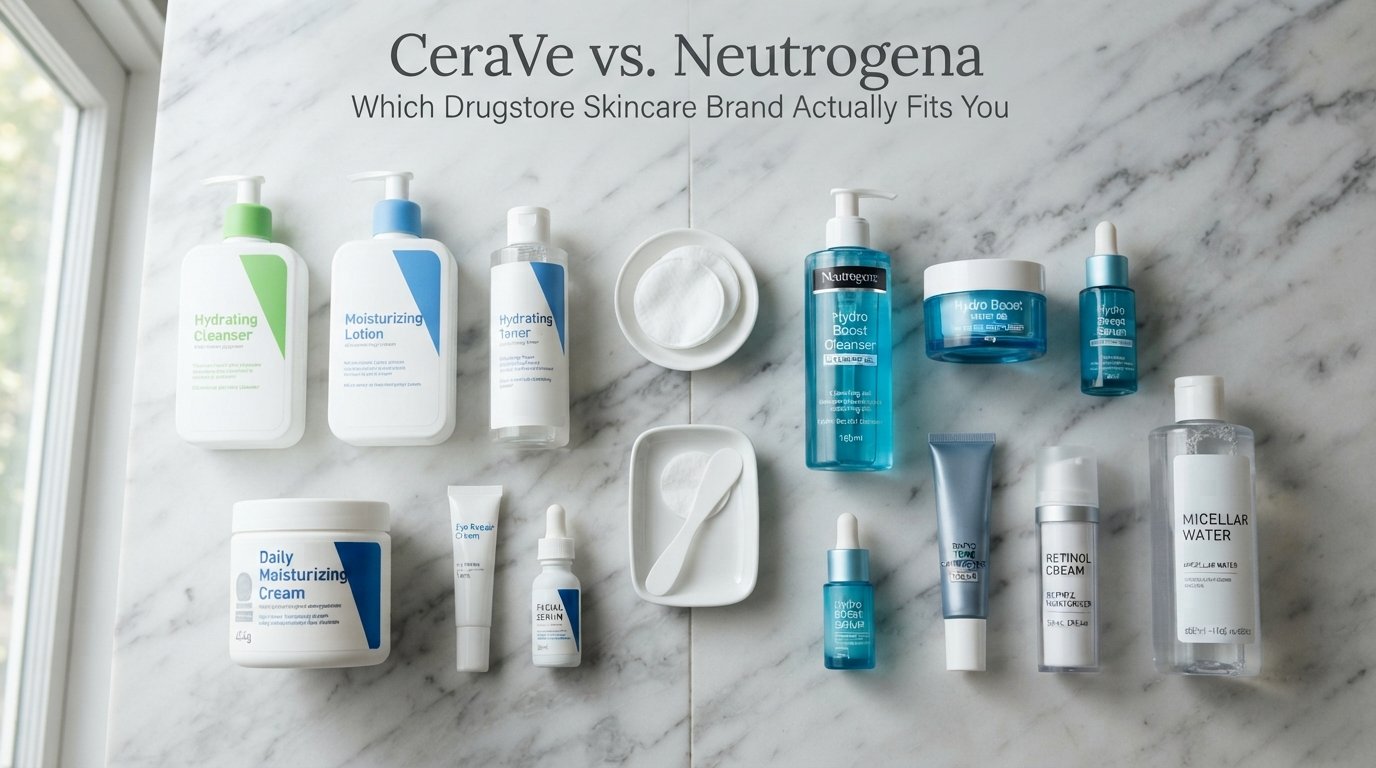
Whenever I ask readers what brought them to a particular skincare article, this comparison comes up constantly. CeraVe and Neutrogena sit side by side on nearly every drugstore shelf, both are consistently recommended by dermatologists, and both have built genuinely loyal followings, yet they are not interchangeable. I wanted to actually sit down, look at their history, their formulation philosophy, and their most popular product lines, and give you an honest comparison rather than just repeating whichever one happens to be trending at the moment.
I want to be upfront that this article may include affiliate links, and you can read more about how that works, and how it never influences my conclusions, on our Affiliate Disclosure page. I also want to remind you that I am not a dermatologist, so if you have a specific skin condition or ongoing concern, please loop in a professional alongside anything you read here.
A Quick Look at Each Brand’s History
CeraVe
CeraVe was founded in 2005 in the United States by a group of dermatologists who wanted to build a skincare line specifically centered on supporting the skin’s natural barrier. From the very beginning, the brand’s identity has been built around a specific combination of three ceramides, lipids that occur naturally in healthy skin, paired with a patented delivery technology called MVE, which releases moisturizing ingredients gradually over an extended period rather than all at once. CeraVe was acquired by L’Oréal in 2017, which helped expand its distribution into more countries while the brand kept its dermatologist developed identity front and center.
Neutrogena
Neutrogena’s history goes back much further, to 1930, when founder Emanuel Stolaroff started a small cosmetics company originally named Natone. The brand’s defining moment came in the 1950s and 60s, when it built its reputation around a mild, clear glycerin soap and a marketing strategy built specifically around relationships with dermatologists, distributing free samples directly through dermatology offices for decades. Johnson & Johnson acquired Neutrogena in 1994, and the brand is now part of Kenvue, the consumer health company that spun off from Johnson & Johnson. Neutrogena continues to actively partner with dermatologists on product development and education today.
Formulation Philosophy
This is where I think the two brands genuinely differ the most, even though both are firmly in the dermatologist recommended, drugstore accessible category.
CeraVe’s Approach
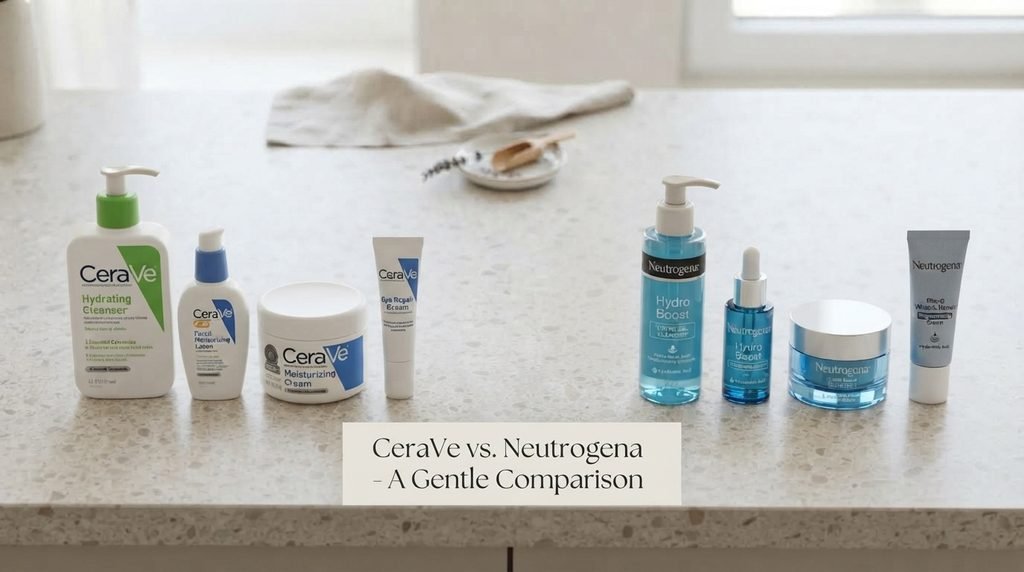
CeraVe’s entire product philosophy is built around a fairly narrow, consistent idea: protecting and restoring the skin barrier using ceramides. Nearly every product in the CeraVe lineup, from cleansers to moisturizers to sunscreens, includes the brand’s signature three ceramide blend, along with ingredients like hyaluronic acid and niacinamide showing up frequently across the range. This consistency means you can generally expect a similar underlying formulation philosophy whether you pick up the Moisturizing Cream, the Hydrating Cleanser, or a newer product in the line.
Neutrogena’s Approach
Neutrogena’s product range is considerably broader and less centered on one single formulation philosophy, reflecting its much longer history and wider category coverage, including acne care, sun protection, anti aging, and hair care alongside general skincare. Popular lines like Hydro Boost lean on hyaluronic acid for lightweight hydration, while other lines focus specifically on acne treatment or sun protection, meaning the “Neutrogena philosophy” is really more about a broad, dermatologist informed product portfolio than one single signature ingredient story.
Popular Product Lines Worth Knowing
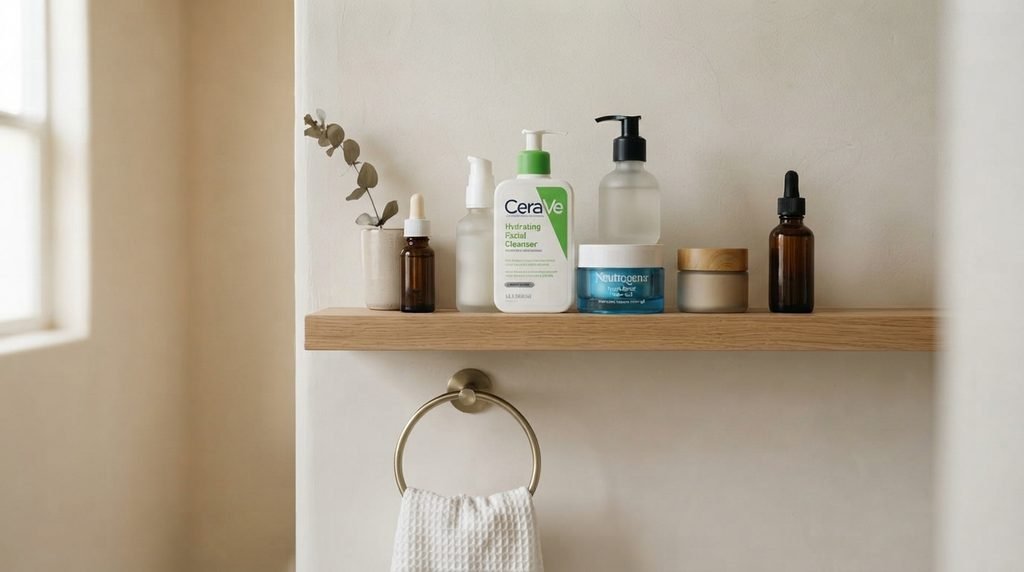
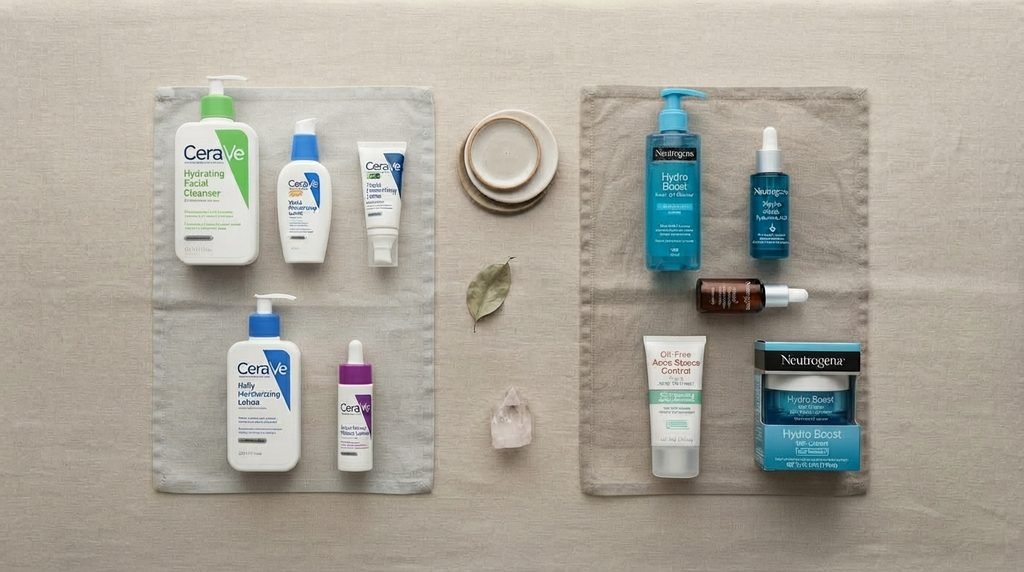
CeraVe is particularly well known for its Moisturizing Cream and Moisturizing Lotion, both built around the brand’s core ceramide and MVE technology combination, along with its Hydrating Facial Cleanser and its more recently expanded acne and eye cream lines.
Neutrogena is especially recognized for its Hydro Boost line, built around hyaluronic acid for lightweight hydration, its long running Oil-Free Acne Wash, and its sun protection range, an area where the brand has built a particularly strong reputation over several decades.
Who Each Brand Tends to Suit Best
CeraVe might be the better fit if: you are specifically looking to repair or strengthen a compromised skin barrier, you have dry, sensitive, or eczema prone skin, or you prefer a brand with a narrow, highly consistent formulation philosophy across its entire range.
Neutrogena might be the better fit if: you want a single brand that covers a wide range of skin needs, from acne to sun protection to anti aging, you are drawn to a specific line like Hydro Boost for lightweight hydration, or you want a brand with an especially long, well documented history of dermatologist collaboration.

Price and Accessibility
Both brands are positioned firmly in the accessible, drugstore price range rather than the prestige skincare segment, and both are widely available at major pharmacies, supermarkets, and online retailers across English speaking markets. Specific pricing varies by product, retailer, and region, so I always recommend checking current pricing directly with your preferred retailer rather than relying on older information, since formulations and pricing do shift over time.
What I Look for Regardless of Brand
Whichever brand you lean toward, I would encourage applying the same evaluation process I described in my guide on how I choose natural skincare products. Reading the actual ingredient list, understanding your specific skin type and goals, and patch testing before committing to a full routine matters more, in my experience, than brand loyalty alone.
If you are specifically building a routine around calming, barrier supporting ingredients, you might also enjoy my article on aloe vera in natural beauty, since aloe often shows up alongside ceramide focused formulations for reactive skin.
My Honest Take
I do not think there is a single correct answer to this comparison, and I would be doing you a disservice if I pretended otherwise. If your primary concern is a compromised or reactive skin barrier, CeraVe’s narrow, consistent formulation philosophy is genuinely appealing. If you want one brand that can realistically cover acne, sun protection, and hydration all in one place, Neutrogena’s broader range has a real advantage. I would encourage looking at the specific product and its full ingredient list rather than assuming either brand name alone guarantees the right fit for your skin.
Frequently Asked Questions
Is CeraVe or Neutrogena better for acne prone skin? Neutrogena has a longer, more established history specifically in acne treatment products, while CeraVe’s acne line focuses more on treating acne without compromising the skin barrier. Many people with acne prone, sensitive skin appreciate CeraVe’s gentler approach, but this really depends on your specific skin’s needs.
Are CeraVe and Neutrogena owned by the same company? No. CeraVe has been owned by L’Oréal since 2017, while Neutrogena is owned by Kenvue, the consumer health company that spun off from Johnson & Johnson.
Which brand is more affordable? Both brands are generally similarly priced within the drugstore skincare category, though specific products and promotions can vary, so I recommend comparing current prices directly for the specific products you are considering.
Can I mix products from both brands in one routine? Yes, there is no inherent reason you cannot combine products from different brands, including these two, as long as the individual products suit your skin type and you introduce anything new gradually.
A Gentle Closing Thought
CeraVe and Neutrogena have both earned their reputations through decades, or in CeraVe’s case, two decades, of consistent dermatologist involvement, which is genuinely rare in the beauty industry. I hope this comparison gave you a clearer sense of which brand’s philosophy actually lines up with what your skin needs, rather than leaving you to guess based on which one is more talked about online this month.
References
The following sources were used while researching this article: