
Chamomile Benefits: My Complete Guide to This Timeless Calming Herb
I still remember the first time someone handed me a cup of chamomile tea and told me it would help me relax. I was in the middle of a particularly overwhelming week, and I remember thinking that a cup of tea couldn’t possibly do much for the kind of tension I was carrying. But I drank it anyway, mostly out of politeness, and something about that warm, slightly sweet, apple like aroma made me pause for a moment. That small pause turned into a habit, and that habit eventually turned into years of research into one of the gentlest and most fascinating herbs I have ever studied.
Chamomile is one of those plants that feels almost too familiar to take seriously. It shows up in grocery store tea aisles, in baby products, in skincare creams, and in home remedies passed down through generations. But familiarity does not mean we fully understand it. In this guide, I want to walk you through what chamomile actually is, what we know about its benefits based on available research, how I personally use it, and how you can safely explore it in your own routine.
As always, I want to be upfront about something important. I am not a doctor, a dermatologist, or a licensed herbalist. Everything I share here comes from careful research and my own experience as someone who has spent years studying natural beauty and wellness topics. If you are dealing with a specific health condition, are pregnant or breastfeeding, or are taking any medication, please talk to a qualified healthcare professional before adding chamomile, or any new herb, to your routine.
What Exactly Is Chamomile
Chamomile refers to a small group of daisy like flowering plants, and the two most commonly used varieties are German chamomile and Roman chamomile. When you see chamomile tea, chamomile extract, or chamomile oil in a product, it is most often German chamomile, which has been the subject of the majority of available research.
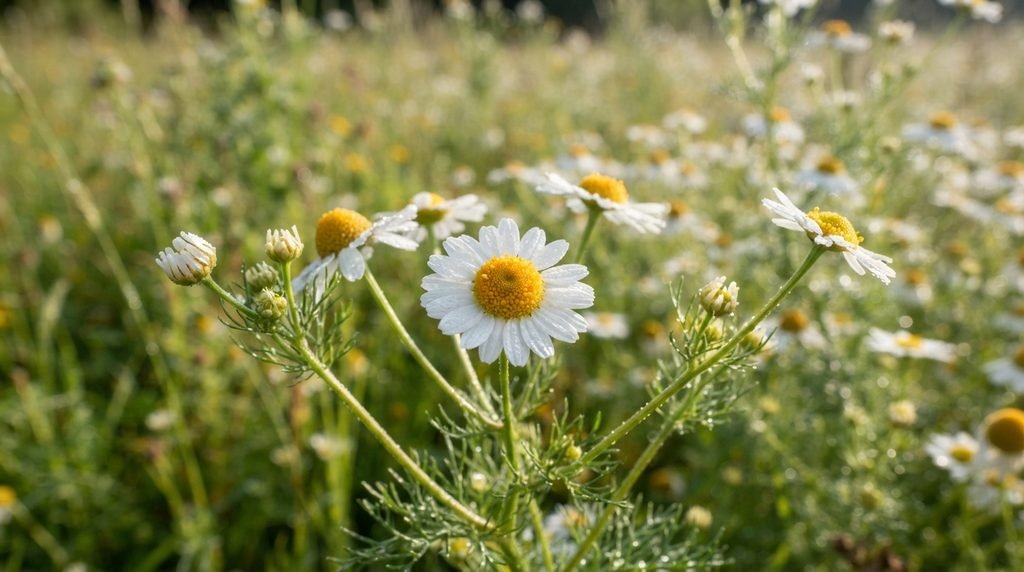
The plant itself is unassuming. Small white petals surround a bright yellow center, and the flowers are usually dried before being used in teas, tinctures, oils, or skincare formulations. What makes chamomile interesting from a botanical perspective is the sheer number of compounds found inside those tiny flowers, including flavonoids like apigenin, which many researchers believe play a role in the plant’s calming reputation.
A Brief Look at Chamomile’s History
Long before chamomile became a familiar tea bag on supermarket shelves, it held an important place in several ancient cultures. Historical records show that chamomile was used in ancient Egypt, Greece, and Rome, often associated with healing rituals and everyday remedies. In traditional Chinese medicine, it also found its place as part of a broader herbal toolkit.
What strikes me most when I read about chamomile’s history is how consistent its reputation has been across such different cultures and time periods. Long before anyone had the tools to study flavonoids or essential oils in a laboratory, people were reaching for chamomile to soothe an upset stomach, calm a restless mind, or care for irritated skin. That kind of consistency across centuries and continents does not prove effectiveness on its own, but it does tell us that this plant has earned its place in the human relationship with nature in a meaningful way.
What the Research Actually Says About Chamomile Benefits
This is the part I take most seriously, because it is easy for wellness content to overstate what herbs can do. I would rather give you an honest picture than an exaggerated one.
Sleep and Relaxation
Chamomile’s reputation as a bedtime tea is probably its most well known association. Some research has looked into chamomile extract and its effects on sleep quality, and while results are not entirely conclusive, several studies suggest a possible mild improvement in relaxation and perceived sleep quality, particularly with concentrated extracts rather than a single cup of tea. The National Center for Complementary and Integrative Health, part of the National Institutes of Health, notes that while chamomile is widely promoted for insomnia, the evidence remains limited and not sufficient to fully confirm its effectiveness for this specific use.
In my own experience, I have found that the ritual of preparing a warm cup of tea before bed, combined with chamomile’s gentle aroma, contributes to a sense of calm that supports my wind down routine, even if I cannot say with certainty how much of that effect comes from the herb itself versus the ritual around it.
Anxiety and Stress
This is actually one of the areas where chamomile has some of the more promising preliminary research behind it. A few clinical trials have explored chamomile extract for generalized anxiety, and some have reported a meaningful reduction in anxiety symptoms among participants over several weeks of consistent use. These studies typically used concentrated chamomile extract rather than tea, so it is worth keeping that distinction in mind.
I find this particularly interesting because it lines up with something people have intuitively believed about chamomile for a very long time, and it is encouraging to see modern research beginning to explore that connection more formally, even though more studies are still needed before we can draw firm conclusions.
Digestive Comfort
Chamomile has traditionally been used to ease an upset stomach, mild indigestion, and general digestive discomfort. While large scale clinical evidence specifically isolating chamomile’s role here is still limited, this remains one of its most consistent traditional applications across different cultures, and it is part of why chamomile tea is often recommended as a gentle after meal drink.
Skin Comfort
Topical chamomile, whether in the form of oils, gels, or creams, has been studied for its potential to soothe certain types of skin irritation. Some research has compared chamomile preparations to mild hydrocortisone creams for conditions like eczema, with chamomile showing a noticeably milder but still present effect. This does not mean chamomile can replace a dermatologist prescribed treatment, but it does help explain why so many gentle, sensitive skin skincare products include chamomile extract in their formulations.
How I Personally Use Chamomile
Over the years, I have incorporated chamomile into my routine in a few different ways, and I want to share these honestly, including the parts that are more about personal preference than proven science.
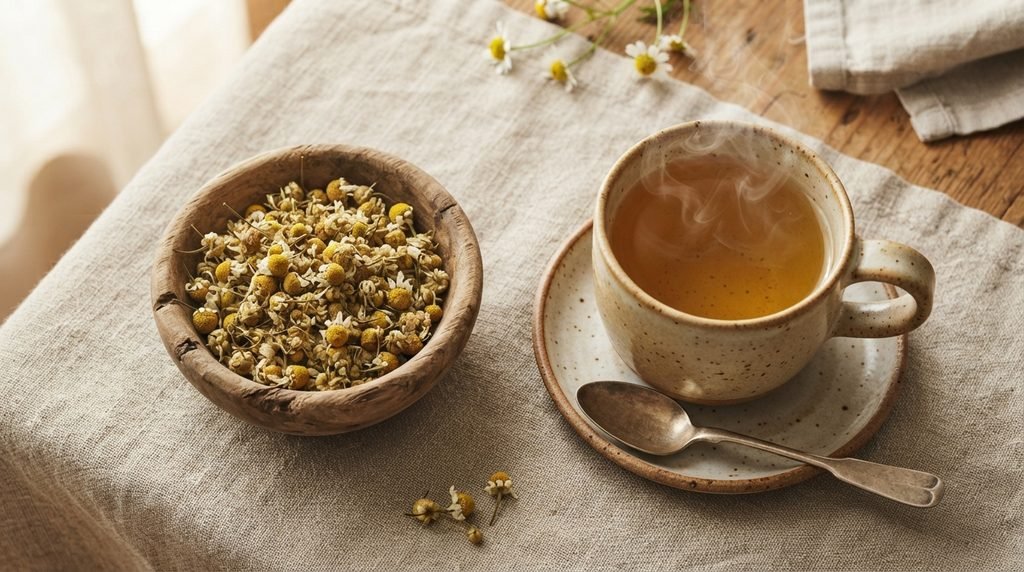
As an evening tea. This is still my favorite way to use chamomile. I brew a cup about thirty to forty minutes before bed, often combined with a small honey drizzle, and I treat it as part of my wind down ritual rather than a guaranteed sleep solution.
In a warm compress. When my skin feels irritated or a bit reactive, I sometimes brew a strong cup of chamomile tea, let it cool to a comfortable temperature, soak a clean cloth in it, and apply it gently to the area for a few minutes. I find the process soothing, though I always patch test any new approach before using it regularly.
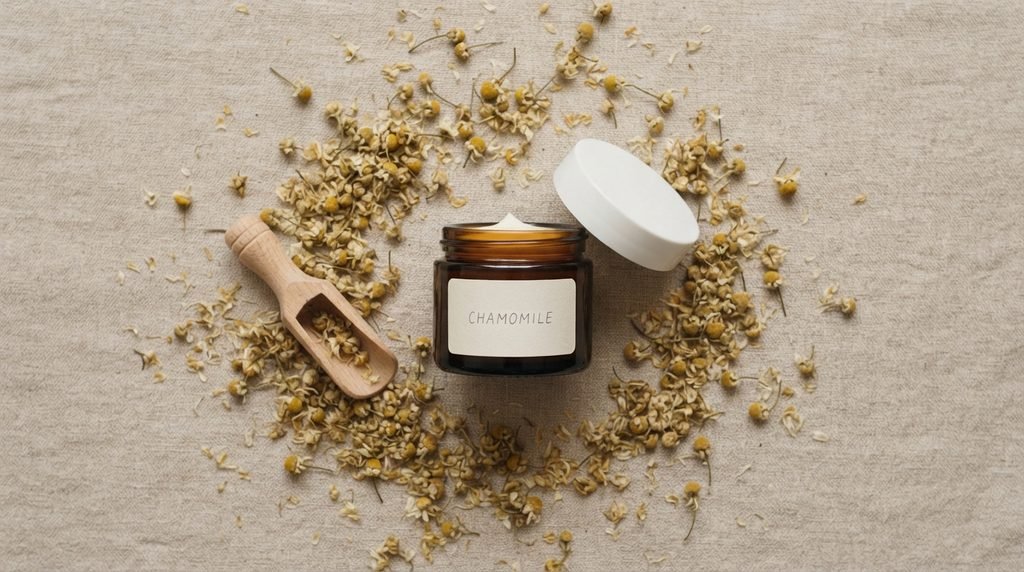
Through skincare products. Rather than making my own extracts at home, I generally prefer to look for chamomile listed as an ingredient in gentle, well formulated skincare products meant for sensitive skin, since this tends to be a more consistent and tested way to use the plant topically.
As a steam. On days when I want a small self-care pause, I add a handful of dried chamomile flowers to a bowl of hot water and lean over it for a few minutes with a towel over my head, treating it more as a calming ritual than a treatment.
How to Choose Quality Chamomile
Not all chamomile products are created equal, and this is something I think does not get discussed enough. When choosing chamomile tea or dried flowers, I look for a few specific things.
I check whether the product specifies German chamomile, since this is the variety most studies have focused on. I also look for organic certification when possible, since chamomile flowers have a relatively delicate structure and can absorb pesticide residue. Whenever I can, I prefer buying from brands that are transparent about sourcing, since herbal quality can vary significantly between suppliers.
For topical products, I read the full ingredient list rather than relying on marketing claims like “with chamomile” on the front of the packaging, since the position of chamomile within the ingredient list tells you much more about its actual concentration in the formula.
Safety, Side Effects, and Who Should Be Cautious
Chamomile is generally considered safe for most people when used in typical amounts, such as a cup or two of tea per day, but there are some important considerations I think every reader should know.
Chamomile belongs to the daisy family, which means people with allergies to ragweed, marigolds, chrysanthemums, or daisies may also react to chamomile, sometimes with skin irritation or, in rarer cases, more significant allergic reactions. If you have any of these allergies, I would strongly encourage you to speak with a healthcare provider before trying chamomile in any form.
There is also some research suggesting chamomile may interact with certain medications, including blood thinners and, in some cases, hormonal medications such as oral contraceptives. Pregnant or breastfeeding individuals are generally advised to be cautious, since there is limited research confirming its safety in these situations.
If you are currently taking prescription medication, managing a health condition, or simply unsure whether chamomile is a good fit for your situation, please talk to your doctor, pharmacist, or another qualified healthcare professional before adding it to your routine. This is exactly the kind of decision where personalized medical guidance matters far more than a general wellness article, including this one.
Chamomile and the Bigger Picture of Natural Beauty
One of the reasons I find chamomile so representative of what FloraGlowUp is about is that it sits exactly at the intersection of tradition and modern formulation. It is not a trendy new ingredient discovered last year. It is a plant that has quietly supported human self-care routines for thousands of years, and it continues to show up in serious scientific research today.
If you are just starting to explore natural beauty and wellness, chamomile is a gentle, accessible place to begin. You do not need an elaborate routine or expensive products. A simple cup of tea, chosen thoughtfully and enjoyed regularly, can be a meaningful first step toward a more intentional relationship with the plants that support our wellbeing.
If you would like to go deeper into this topic, I recommend exploring our Natural Wellness category for more on building sustainable, everyday self-care habits, or browsing our Beauty & Skincare section if you are specifically interested in how ingredients like chamomile show up in skincare formulations. You can also read more about how we research and evaluate every plant and ingredient we cover on our Editorial Policy page.
Frequently Asked Questions
Can I drink chamomile tea every day? For most healthy adults, one to two cups of chamomile tea per day is generally considered safe. If you plan to drink it regularly over a long period, it is still a good idea to mention this to your doctor, especially if you take any regular medication.
Does chamomile really help with sleep? Some research suggests a possible mild benefit, particularly with concentrated extracts, though the evidence is not strong enough to call chamomile a proven sleep treatment. Many people, myself included, find value in the calming ritual around it as much as the herb itself.
Is chamomile safe for children? Chamomile has traditionally been used for infants and young children in some cultures, but this is exactly the kind of use that should always be discussed with a pediatrician first, given the limited formal research available for this age group.
Can chamomile be used on the skin every day? Chamomile is generally considered gentle, but every person’s skin reacts differently. I always recommend patch testing any new topical product, including chamomile based ones, and introducing it gradually into your routine.
A Gentle Closing Thought
Chamomile will probably never be the most exciting ingredient in the wellness world. It does not come with dramatic before and after claims or viral social media moments. But there is something quietly powerful about a plant that has earned the trust of so many different cultures across so many centuries, and that continues to show up, humbly, in a warm cup of tea at the end of a long day.
I hope this guide gave you a clearer, more honest picture of what chamomile can and cannot do, and that it inspires you to approach it, and every other herb we cover here at FloraGlowUp, with both curiosity and care.

References
The following trusted institutions were used as sources while researching this article: